

-
AboutHebei Linaier Rubber Products Co., Ltd. is located in Duqiao Industrial Zone, Jingxian City, Hebei Province, adjacent to Dezhou, Shandong. Founded in early 2001 with a registered capital of 35 million yuan, it is a scientific

-
ProductMain products: vertical and horizontal imported and domestic filter plates, diaphragm plates, diaphragms and accessories; pinch valve sleeves and pinch valves and various mining accessories.
-
NewsIn 2013, our company's high-pressure cylinder with phenolic cloth support and guide ring obtained the national key new product certificate, project number: 2013GRA20011; its products in coal cylinders and engineering hydrauli
-
ServiceWe will actively cooperate with more enthusiasm, strengthen internal management, expand the market externally, improve various performance indicators of existing products, and truly achieve our win-win situation!
-
RecruitmentOur company always adheres to the talent concept of "people-oriented", provides a growth platform for talents, and realizes the common growth and development of enterprises and talents.


 Esperanto
 Shqiptare
 Euskara
 Zulu
 Latinus
 Cymraeg
 தமிழ்
 Slovak
 Slovak
 Afrikaans

What is pressure dewatering and how does it work in industrial processing
Release time:
2026-11-21
Author:
Linaier
Article overview
This guide covers the full scope of pressure dewatering in industrial processing — from first principles and equipment types to selection criteria, filterability testing, maintenance, and Finnish regulatory compliance. Intended for water and civil engineers at the research and procurement stage.
Table of contents
- 1. What pressure dewatering means and why it matters
- 2. How pressure dewatering works: core mechanism explained
- 3. Key equipment types used in pressure dewatering
- 4. How to select the right pressure dewatering system
- 5. Filterability testing: measuring dewatering potential
- 6. Operating, maintaining, and troubleshooting pressure dewatering systems
- 7. Finnish and Nordic regulatory context for sludge disposal
- 8. Frequently asked questions
What pressure dewatering means and why it matters
Pressure dewatering is a mechanical solid-liquid separation process in which hydraulic pressing or compression force is applied to a wet solid mass — typically sludge, mineral slurry, or industrial waste — to expel interstitial water and produce a handleable solid cake. Unlike thermal drying, no heat energy is required at the primary stage, making it one of the most energy-efficient moisture removal strategies available to industrial operators today.
The relevance of pressure dewatering stretches far beyond wastewater treatment. Mining operations use it to recover process water from tailings. Food processing plants rely on it to reduce organic waste volumes. Paper mills, chemical plants, and municipal water utilities all depend on some form of compression filtration to meet environmental discharge limits and reduce haulage costs.
Why do engineers consistently return to pressure-based methods rather than alternatives? The short answer is predictability. Gravity settling alone leaves sludge at 95–98% moisture content. Vacuum filtration can reach 75–85% moisture. Pressure dewatering — specifically a well-tuned filter press — routinely achieves cake moisture below 60%, and in some mineral applications below 20%. That difference translates directly into disposal weight and cost.
According to the dewatering methods and applications overview maintained on Wikipedia, mechanical dewatering methods that apply external force consistently outperform passive separation in terms of final solids concentration, particularly when feed sludge has poor settling characteristics.
In 2026, as Finnish municipalities face stricter landfill diversion targets under national waste legislation, the ability to produce a dry, stable cake is not merely an operational preference — it is frequently a compliance requirement.
The economic case for reducing sludge moisture
Sludge disposal cost scales almost linearly with wet weight. A municipal wastewater plant producing 10 m³/h of thickened sludge at 5% dry solids faces dramatically different transport costs than the same plant achieving 30% dry solids through filter press dewatering. Reducing moisture from 95% to 70% cuts the volume that must be hauled by approximately 83%. At Finnish tipping fees of roughly €80–120 per tonne (2026 estimates), this represents significant annual savings even for mid-sized facilities.
Where pressure dewatering fits in the treatment chain
Pressure dewatering is not a standalone step. It sits downstream of thickening and conditioning — typically after gravity belt thickening or dissolved air flotation — and upstream of final disposal or beneficial reuse. The conditioning step, usually polymer dosing, is critical: without adequate floc structure, even the best filter press cannot achieve target cake dryness. This interdependency is something that generic equipment brochures often understate.
How pressure dewatering works: core mechanism explained
The working principle of pressure dewatering is straightforward in concept but sensitive in practice. A slurry is introduced into a confined chamber. Pressure — applied either mechanically, hydraulically, or pneumatically — forces liquid through a permeable medium (the filter cloth) while retaining solids. The result is a filter cake on one side and clarified filtrate on the other.
Stages of a typical pressure dewatering cycle
- Feed stage: Slurry is pumped into the filter chamber at low pressure (typically 1–3 bar) to fill the void space and begin initial cake formation.
- Compression stage: Pressure is increased progressively — commonly from 6 bar up to 15–16 bar in high-pressure filter presses, or up to 1.5 MPa in membrane press configurations — compacting the forming cake and expelling bulk water.
- Membrane squeeze (if equipped): Inflatable rubber membranes press the cake from both sides simultaneously, achieving an additional 5–15 percentage points of dry solids beyond what compression alone provides.
- Air blow: Compressed air is passed through the cake to displace residual moisture from pores, particularly effective in mineral and chemical applications.
- Cake discharge: Plates separate and the dried cake drops free, either manually or via automated shaking mechanisms.
Think of this process like wringing out a wet cloth: the first twist expels most of the free water quickly, but reaching the last percentage of moisture requires sustained, increasing force. That analogy captures why pressure — not just time — determines final cake dryness in compression filtration.
Key parameters governing dewatering performance
Actual dewatering outcomes depend on several interacting variables. Feed solids concentration matters enormously: a feed at 2% dry solids will form a thinner, wetter cake than one conditioned to 5% before pressing. Applied pressure, filtration time, cloth permeability, and sludge compressibility all interact. Compressible sludges — biological waste activated sludge being the classic example — tend to consolidate under pressure in ways that actually impede filtrate flow, requiring careful cycle design.
"The specific resistance to filtration (SRF) remains the most reliable single indicator of how readily a sludge will dewater under pressure. A well-conditioned municipal sludge should achieve SRF values below 1 × 10¹³ m/kg before entering any mechanical dewatering device." — Handbook of Water and Wastewater Treatment Technology, Metcalf & Eddy

Key equipment types used in pressure dewatering
Several distinct equipment categories implement pressure dewatering in industrial processing. Each has measurable performance characteristics, and selecting the wrong type for a given application is one of the most common — and costly — mistakes made during procurement.
Filter press (plate-and-frame and membrane)
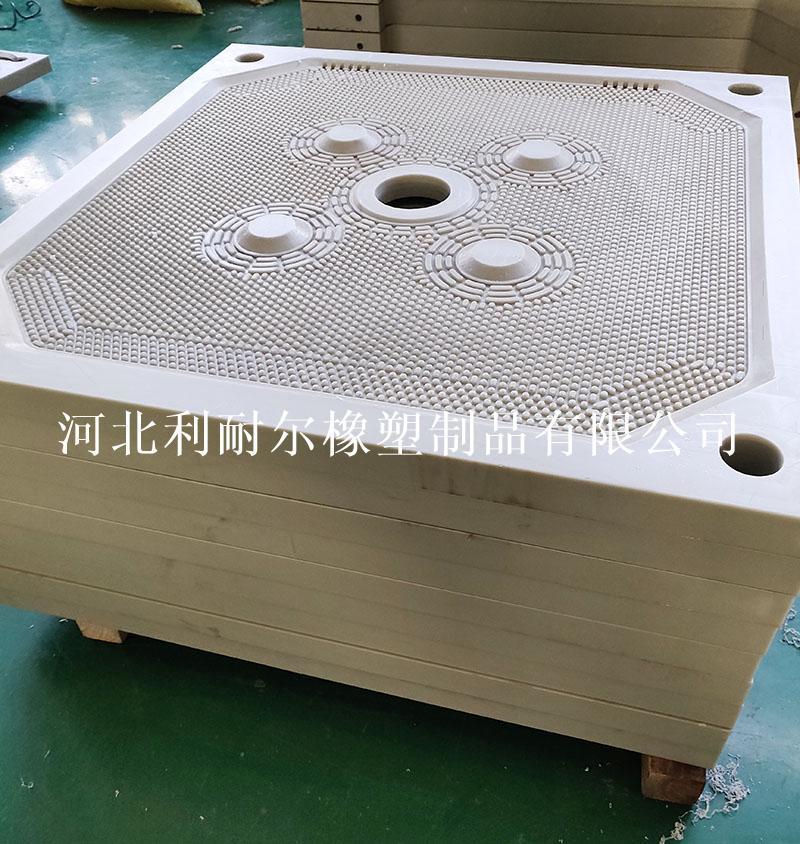
The filter press remains the dominant technology for applications requiring high cake dryness. Recessed-chamber designs operate at 6–16 bar; membrane filter presses reach effective squeeze pressures of up to 1.5 MPa. Cake dry solids of 30–50% are achievable on municipal sludge, rising to 70–85% on mineral concentrates. Throughput typically ranges from 0.5 to 50 m³/h depending on plate count and press size. Energy consumption for the hydraulic pressing unit alone runs approximately 0.3–0.8 kWh/m³ of feed processed, though polymer conditioning adds to the total system energy budget.
Belt press dewatering
Belt press dewatering uses two continuous porous belts that sandwich pre-conditioned sludge and pass it through a series of rollers with increasing nip pressure. Operating pressures are lower — typically 2–8 bar at the nip — but throughput is continuous rather than batch, making belt presses suitable for high-volume, lower-solids applications such as municipal biosolids. Cake dryness typically reaches 18–28% on waste activated sludge. Energy consumption is lower than filter presses at around 0.1–0.3 kWh/m³, but polymer demand is higher.
Screw press and centrifugal dewatering
Screw presses apply progressive compression through a rotating helical screw inside a cylindrical screen. They are low-maintenance, continuous-operation machines suited to fibrous or coarse sludge. Centrifugal dewatering uses high rotational speed (1,500–4,000 rpm) to achieve solid-liquid separation via centrifugal force rather than applied pressure, though it is often grouped alongside mechanical dewatering equipment. Centrifuges handle difficult, compressible sludges effectively but consume significantly more energy — typically 1.5–3.0 kWh/m³ — and have higher capital costs.
For further technical context on these technologies, the resource covering mechanical dewatering in engineering on ScienceDirect provides peer-reviewed detail on operating parameters and comparative performance data.
How to select the right pressure dewatering system
Equipment selection cannot be reduced to a single variable. The correct approach is to map application-specific constraints — sludge type, required cake dryness, throughput, available footprint, CAPEX budget, and disposal pathway — against each technology's performance envelope. The table below consolidates the most critical decision parameters.
| Parameter | Membrane filter press | Belt press | Screw press | Centrifuge |
|---|---|---|---|---|
| Operating pressure | Up to 1.5 MPa | 2–8 bar (nip) | 0.3–0.8 MPa | Centrifugal (not pressure) |
| Cake dry solids (municipal sludge) | 30–45% | 18–28% | 18–25% | 22–32% |
| Typical throughput | 0.5–50 m³/h (batch) | 5–100 m³/h | 1–30 m³/h | 5–80 m³/h |
| Energy consumption (kWh/m³) | 0.3–0.8 | 0.1–0.3 | 0.2–0.5 | 1.5–3.0 |
| Relative CAPEX | High | Medium | Low–Medium | High |
| Typical payback period (Finland) | 3–6 years | 4–7 years | 2–4 years | 5–9 years |
| Best suited for | High dryness, minerals, landfill diversion | High-volume municipal biosolids | Fibrous or organic sludge | Difficult compressible sludge |
Of course, there are situations where a single technology does not meet all constraints simultaneously. A plant requiring continuous operation and very high cake dryness may need to combine a belt press for primary dewatering with a downstream filter press for final polishing — a configuration seen in several Finnish paper industry installations.
Lifecycle cost: looking beyond the purchase price
Filter cloth replacement is a recurring OPEX item that engineers sometimes underestimate at the selection stage. On a 100-plate membrane press running two cycles per day, cloth sets may need replacement every 12–24 months at a cost of €15,000–€40,000 per change, depending on plate size. Add polymer costs — typically €1.5–€4.0 per kg of dry solids processed — and the total operating cost picture changes substantially compared to capital cost alone. For Finnish projects operating under tight municipal budgets, a full lifecycle cost model covering a 15–20 year asset life is strongly recommended before procurement.
Real project reference: municipal sludge in central Finland
Based on documented project data from a mid-sized Finnish wastewater treatment plant (serving approximately 40,000 population equivalents), upgrading from a belt press to a membrane filter press system resulted in cake dry solids increasing from 22% to 38%. Annual sludge transport tonnage dropped by approximately 45%, and total annual disposal cost savings exceeded €120,000 at prevailing 2024–2025 tipping fee rates. CAPEX for the new press system was approximately €480,000; the calculated simple payback period was 4.0 years.
Filterability testing: measuring dewatering potential
Before specifying equipment, understanding how readily a given sludge dewaters is essential. Two laboratory methods dominate industrial practice: specific resistance to filtration (SRF) and capillary suction time (CST).
Specific resistance to filtration (SRF)
SRF quantifies the resistance a cake offers to liquid flow per unit mass. It is determined by measuring filtrate volume collected over time under constant pressure (typically 0.5 bar) on a Buchner funnel apparatus. The slope of the t/V versus V plot yields SRF via the following relationship:
SRF (m/kg) = (2 · ΔP · A²· b) / (μ · C)
Where: ΔP = applied pressure (Pa), A = filter area (m²), b = slope of t/V vs. V plot, μ = filtrate viscosity (Pa·s), C = mass of dry solids per unit volume of filtrate (kg/m³).
A well-conditioned sludge targeting filter press dewatering should achieve SRF below 1 × 10¹³ m/kg. Unconditioned activated sludge often exceeds 10¹⁴ m/kg — essentially unfilterabilble at practical press operating times without polymer addition.
Capillary suction time (CST)
CST is a faster, less precise screening test. A sludge sample is placed in a standard Triton Electronics CST apparatus; the time required for filtrate to travel 1 cm through filter paper under capillary suction is recorded in seconds. Values below 20 seconds typically indicate good dewaterability. Values above 100 seconds signal problematic sludge requiring conditioning adjustment before mechanical dewatering can be effective. Actual testing at a Finnish paper mill demonstrated that increasing polymer dose from 6 kg/t DS to 9 kg/t DS reduced CST from 142 seconds to 31 seconds, enabling reliable belt press operation.
Operating, maintaining, and troubleshooting pressure dewatering systems
Even correctly specified equipment underperforms without disciplined operation. The most common root cause of poor cake dryness in field conditions is not equipment failure — it is suboptimal polymer conditioning.
Flocculant dosing optimisation
Polymer selection and dose rate must be matched to the specific sludge composition and vary seasonally. Practically, operators should run jar tests (or dedicated dosing optimisation trials on the full-scale unit) whenever feed sludge characteristics change — following digestion upsets, season changes, or influent composition shifts. Overdosing polymer is as problematic as underdosing: excess unbound polymer can blind filter cloths and increase filtrate turbidity. A systematic monthly dosing review is best practice at Finnish treatment facilities operating membrane presses.
Filter cloth maintenance and troubleshooting common faults
Filter cloths are the most maintenance-intensive component in a filter press. Blinding — the gradual blockage of cloth pores by fine particles or biological growth — manifests as increasing cycle times with decreasing cake dryness. High-pressure cloth washing after each cycle is standard practice, but chemical washing (acid or alkali depending on fouling type) should be scheduled every 4–8 weeks on biological sludge applications. Beyond cloth issues, the following fault conditions are most frequently reported:
- Cake cracking or dry spots: Usually caused by channelling from uneven feed distribution. Check feed pump pressure and distribution manifold for blockages.
- High filtrate turbidity: Indicates cloth damage or blowthrough at plate seals. Inspect cloth seating and seal integrity after each inspection cycle.
- Increasing cycle time with no dryness improvement: Classic symptom of cloth blinding — schedule chemical wash.
- Hydraulic system pressure drop: Check hydraulic fluid level and pump condition; membrane press hydraulics are high-duty components requiring quarterly inspection.
Why do so many facilities overlook preventive cloth maintenance schedules? In practice, maintenance teams often respond to visible failures rather than tracking cycle time trends. Implementing a simple cycle-time log and setting alert thresholds at +15% of baseline cycle time provides early warning before cake dryness degrades measurably.
Finnish and Nordic regulatory context for sludge disposal
In Finland, the disposal pathway for dewatered sludge cake is governed by several overlapping regulatory frameworks that directly determine the target cake dryness required at the press outlet.
Landfill restrictions and the pressure on dryness targets
Finland's national waste legislation, aligned with EU Landfill Directive requirements, restricts the landfilling of organic waste and sets minimum dry solids requirements for stabilised sludge accepted at Finnish landfill sites. In 2026, most Finnish landfill operators require incoming sludge cake to meet a minimum of 25–30% dry solids, with several facilities applying stricter site-specific limits. This threshold directly defines the minimum acceptable cake dryness from any pressure dewatering system serving a municipal client targeting landfill disposal.
Agricultural land application and incineration limits
For sludge destined for agricultural land application — still a common disposal route in rural Finland — the Finnish Environment Institute (Syke) and Ministry of Agriculture guidelines set maximum limits on heavy metals (cadmium, mercury, lead, chromium), pathogens, and certain organic contaminants in applied biosolids. Meeting these limits is primarily a function of source control and treatment, not dewatering performance. However, cake dryness affects transport economics and spreading logistics significantly.
Incineration as a disposal route — increasingly adopted at Finnish co-incineration facilities accepting municipal sludge — requires a minimum calorific value that is only achievable above approximately 25–30% dry solids. Below this threshold, the energy balance is negative and incineration operators may refuse intake. This regulatory and commercial pressure is a primary driver of investment in high-dryness membrane filter press technology across Finnish wastewater utilities in 2026.
Operators should also confirm environmental permit conditions (ympäristölupa) specific to their facility, as individual permit conditions may impose more stringent dryness or handling requirements than national minimums. Consulting your regional Centre for Economic Development, Transport and the Environment (ELY Centre) is recommended when specifying new dewatering installations or modifying existing ones.
Frequently asked questions
Q: What is the typical pressure range used in industrial pressure dewatering?
A: Most industrial filter presses operate between 6 and 16 bar for recessed-chamber designs. Membrane filter press configurations can apply effective squeeze pressures up to 1.5 MPa (15 bar) during the diaphragm stage. Belt press dewatering operates at much lower nip pressures of 2–8 bar but compensates with continuous operation.
Q: How does pressure dewatering differ from vacuum filtration?
A: Vacuum filtration applies a pressure differential of at most 1 bar (atmospheric) across the filter medium, limiting achievable cake dryness to roughly 75–85% moisture content. Pressure dewatering applies positive pressure well above atmospheric, enabling much greater compaction force and routinely achieving cake moisture below 60% — in some mineral applications below 20%.
Q: What cake dryness should a filter press achieve on municipal sludge?
A: A well-conditioned municipal sludge processed through a membrane filter press should produce cake dry solids of 30–45%. Recessed-chamber presses without membrane squeeze typically achieve 25–35%. Performance is heavily influenced by polymer conditioning — underdosed or mismatched polymer is the leading cause of below-specification cake dryness in practice.
Q: Is pressure dewatering equipment suitable for small installations in Finland?
A: Yes. Compact filter press models designed for smaller throughputs (0.5–5 m³/h) are commercially available and suitable for smaller Finnish municipalities, industrial facilities, or remote wastewater plants. Screw presses offer an alternative for fibrous sludge streams with lower capital cost and minimal operator attention. Equipment selection should always be preceded by a pilot test or laboratory filterability assessment specific to the local sludge.
Q: What maintenance tasks are most critical for sustaining filter press performance?
A: Filter cloth condition is the single highest-impact maintenance variable. Regular high-pressure washing after each cycle and scheduled chemical cleaning every 4–8 weeks prevents pore blinding. Hydraulic system fluid checks, plate seal inspection, and polymer dosing optimisation reviews should be part of a monthly maintenance routine. Tracking cycle time as a performance indicator provides early warning of cloth degradation before cake dryness is visibly affected.
Summary: Pressure dewatering remains the most effective and widely deployed mechanical approach to solid-liquid separation in industrial processing. Whether the goal is meeting Finnish landfill dryness thresholds, reducing sludge haulage costs, or enabling incineration as a disposal route, the right pressure dewatering system — correctly specified, conditioned, and maintained — delivers measurable, quantifiable results. Equipment selection based on cake dryness targets, throughput, lifecycle cost, and site-specific sludge characteristics is the foundation of a successful installation.
Related News



Get a Quote