

-
AboutHebei Linaier Rubber Products Co., Ltd. is located in Duqiao Industrial Zone, Jingxian City, Hebei Province, adjacent to Dezhou, Shandong. Founded in early 2001 with a registered capital of 35 million yuan, it is a scientific

-
ProductMain products: vertical and horizontal imported and domestic filter plates, diaphragm plates, diaphragms and accessories; pinch valve sleeves and pinch valves and various mining accessories.
-
NewsIn 2013, our company's high-pressure cylinder with phenolic cloth support and guide ring obtained the national key new product certificate, project number: 2013GRA20011; its products in coal cylinders and engineering hydrauli
-
ServiceWe will actively cooperate with more enthusiasm, strengthen internal management, expand the market externally, improve various performance indicators of existing products, and truly achieve our win-win situation!
-
RecruitmentOur company always adheres to the talent concept of "people-oriented", provides a growth platform for talents, and realizes the common growth and development of enterprises and talents.


 Esperanto
 Shqiptare
 Euskara
 Zulu
 Latinus
 Cymraeg
 தமிழ்
 Slovak
 Slovak
 Afrikaans

Why filter press plate quality matters for your dewatering efficiency
Release time:
2026-11-20
Author:
Linaier
Article overview
This guide explains why filter press plate quality is a decisive factor in dewatering efficiency, and provides a practical framework for diagnosing failures, selecting replacement plates, executing safe installations, and benchmarking costs. Target readers: plant maintenance engineers, process engineers, and procurement specialists working with industrial filtration equipment.
Table of contents
- 1. How plate quality directly controls dewatering performance
- 2. Filter press plate failure diagnosis guide
- 3. OEM brand and model sizing reference table
- 4. Repair vs. replace: a decision framework
- 5. Step-by-step replacement SOP and safety checklist
- 6. Price benchmarks, lead times, and compliance certifications
- 7. Choosing the right replacement filter press plate material
- 8. Frequently asked questions
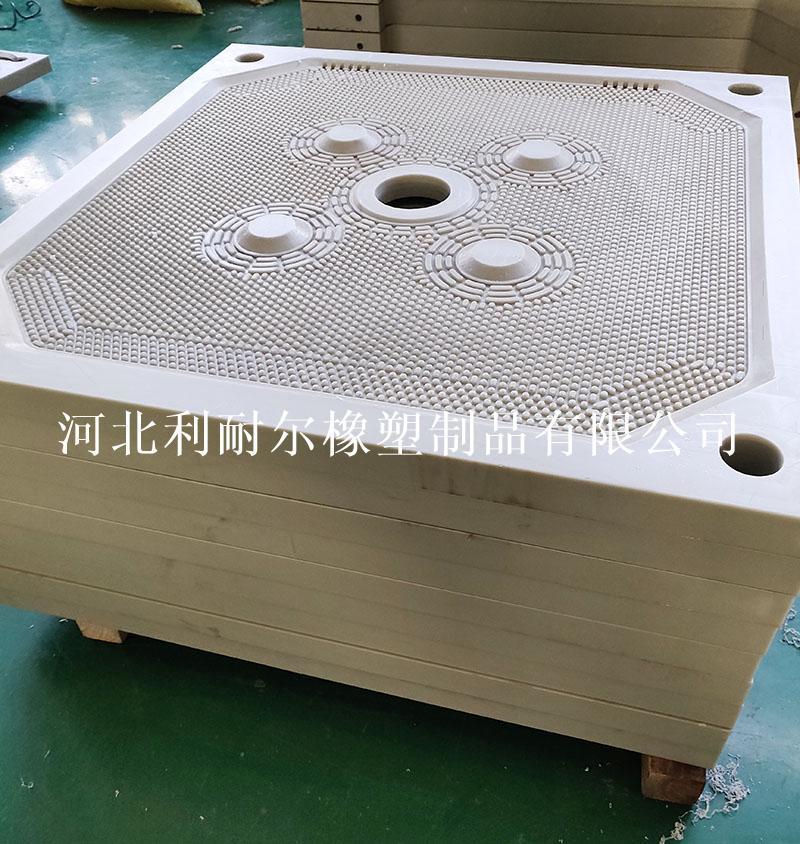
A replacement filter press plate is a direct-fit substitute plate — recessed chamber, membrane, or plate-and-frame type — installed to restore the sealed filtration surface of an industrial filter press after the original plate has warped, cracked, or failed its pressure rating. The connection between plate condition and dewatering efficiency is not theoretical. Every micro-gap in a compromised sealing surface bleeds feed slurry into the filtrate stream, inflates cake moisture content, and extends cycle time. In wastewater treatment, mining, and food processing operations alike, a single degraded plate in a 60-plate press can reduce overall throughput by a measurable margin. That is why understanding plate quality — from material specification through end-of-life diagnosis — is not optional for anyone responsible for slurry dewatering equipment uptime.
1. How plate quality directly controls dewatering performance
Plate quality governs three interdependent performance variables: filtration pressure integrity, cake release consistency, and cycle repeatability. When all plates in a press maintain uniform chamber depth and flat sealing faces, the hydraulic closing force distributes evenly across every joint. The result is predictable cake dryness run after run.
Why sealing face flatness matters more than most engineers expect
Industry testing on recessed chamber filter plates consistently shows that a sealing face deviation exceeding 0.5 mm across the gasket land causes localized pressure loss sufficient to drive cake moisture up by 2–4 percentage points. That may sound small, but in a mining filter press plate application processing 500 tonnes of concentrate per day, a 3-point moisture increase translates directly to higher transport costs and downstream drying energy. Actual site measurements at mineral processing facilities confirm that replacing worn plates with correctly specified parts brings cake moisture back within design targets within the first operating shift.
The cumulative cost of running degraded plates
Think of a filter press like a chain: its dewatering performance is only as strong as its weakest plate. One cracked plate forces operators to reduce closing pressure to avoid catastrophic blowout, which penalizes every other plate in the stack. According to process data from industrial filtration equipment audits, running a press at 15% below rated closing pressure to protect a compromised plate increases average cycle time by 10–18%. Over a 12-month horizon, that lost capacity often exceeds the cost of a full set of chamber filter press components several times over.
2. Filter press plate failure diagnosis guide
Accurate diagnosis before ordering a replacement filter press plate is essential — ordering the wrong failure mode's solution wastes both budget and downtime. The five failure modes below cover the vast majority of field cases.

The five failure modes and how to identify them
| Failure mode | Visual/measurement indicator | Root cause | Flatness tolerance exceeded? | Recommended action |
|---|---|---|---|---|
| Warping | Straightedge gap >0.5 mm across sealing land | Thermal shock, uneven cooling after hot feed | Yes | Replace plate |
| Cracking | Visible fracture lines, filtrate discoloration | Overpressure, impact damage, UV embrittlement | Yes | Replace plate immediately |
| Blistering / swelling | Surface bubbles, chamber depth increase >2 mm | Chemical attack on polypropylene matrix | Yes | Replace plate; audit feed chemistry |
| Seal face leakage | Slurry weeping at plate joint under pressure | Worn filter press plate gasket seal or grit contamination | Sometimes | Replace gasket first; replace plate if face is pitted |
| Turbid filtrate | NTU spike in filtrate outlet | Cloth breakthrough or cracked drainage surface | No | Inspect filter cloth and plate assembly; replace cloth or plate |
Measurement protocol for flatness verification
Use a precision straightedge (minimum 600 mm) and feeler gauges. Place the straightedge diagonally across the sealing land in two directions. Any gap reading above 0.5 mm in a standard polypropylene filter press plate flags the plate for replacement. For filter press membrane plates, also check membrane elasticity: a membrane that no longer returns to its rest position after manual deflection has lost its squeeze capacity and will underperform regardless of plate body condition. Document plate position numbers during inspection — this data is critical for the installation SOP in Section 5.
3. OEM brand and model sizing reference table
One of the most time-consuming problems in procuring a replacement filter press plate is matching OEM specifications. Different filter press plate manufacturers use overlapping nominal sizes but divergent chamber depths, feed hole diameters, and corner ear configurations. The table below covers common presses found in U.S. industrial and municipal facilities.
Common OEM plate sizing reference (U.S. market, 2026)
| OEM brand / press series | Nominal plate size (mm) | Chamber depth (mm) | Feed hole dia. (mm) | Plate type | Feed mode |
|---|---|---|---|---|---|
| JWI 1000 series | 1000 × 1000 | 32 | 50 | Recessed chamber | Center feed |
| JWI 630 series | 630 × 630 | 25 | 40 | Recessed chamber | Center feed |
| Sperry / LASTA 800 | 800 × 800 | 30 | 50 | Membrane plate | Corner feed |
| Watermark 470 | 470 × 470 | 20 | 32 | Recessed chamber | Center feed |
| Generic plate-and-frame 400 | 400 × 400 | varies | 25–40 | Plate and frame | Corner or center |
How to verify your plate specification before ordering
Never rely on nominal size alone. Measure the following directly from a good plate in your press: overall plate length and width (outside ear to outside ear), chamber recess depth (use a depth gauge at the geometric center), feed hole diameter, and handle/lug style (top-hung vs. side-lug). Cross-reference against the OEM nameplate on the press frame. When ordering used filter press plates or aftermarket parts, request a dimensional drawing with tolerances from the supplier — not just a photo — before committing to a purchase order.
4. Repair vs. replace: a decision framework
Not every damaged plate demands immediate full replacement. The right call depends on failure mode severity, available downtime, and total cost of ownership over the next service interval. Here is a structured framework.
When repair is viable — and when it is not
Filter press plate repair — typically sleeve-bushing of worn feed ports or weld-patching of minor corner chips in polypropylene — is cost-effective only when the sealing face remains within flatness tolerance and the structural body has no through-cracks. A repaired plate costs roughly 20–35% of a new equivalent and can be turned around in 3–5 business days by a qualified plastics fabricator. However, repair adds labor time and introduces a potential weak point. If the same plate requires a second repair within 12 months, the economics clearly favor full replacement.
"In our experience auditing filter press installations across municipal wastewater treatment and mining operations, the most expensive decision a plant manager can make is repairing a plate that has already exceeded its flatness tolerance. Every cycle run on a warped plate degrades adjacent plates faster — it is a cascade failure waiting to happen." — Process engineering consensus from industrial filtration equipment maintenance literature, 2025.
Single-plate replacement vs. full set replacement
Single-plate replacement is appropriate when fewer than 10% of the plates in a press show defects and the remaining plates are within specification. Replace the entire set when: (a) more than 15% of plates are defective, (b) the press is more than 8–10 years old and shows widespread UV embrittlement in polypropylene, or (c) you are upgrading from a plate-and-frame filter press to a recessed chamber filter plate configuration for improved cake dryness. A full set replacement also eliminates the dimensional mismatch risk that comes with mixing old and new plates of slightly different thicknesses — a subtle issue that causes uneven closing-force distribution and premature gasket wear.
5. Step-by-step replacement SOP and safety checklist
Proper installation of a replacement filter press plate is as important as the plate specification itself. A correctly specified plate installed incorrectly will fail prematurely. Follow this SOP in sequence.
Pre-replacement safety lockout procedure
- Isolate feed pump and close all inlet and outlet valves. Apply lockout/tagout (LOTO) per OSHA 29 CFR 1910.147.
- Bleed hydraulic closing pressure to zero. Confirm pressure gauge reads 0 bar before approaching the plate stack.
- Flush the press with clean water if the feed contained hazardous or acidic slurry. Allow plates to cool to below 40 °C (104 °F) before handling — thermal shock from cold water on a hot polypropylene filter press plate accelerates micro-cracking.
- Record the existing plate sequence (number each plate position with a paint marker) before pulling any plate.
Installation sequence and torque specifications
- Inspect the new plate's sealing face with a straightedge before installation. Confirm flatness tolerance ≤0.5 mm.
- Install new filter press plate gasket seals or O-rings in the correct groove. Lubricate lightly with a compatible grease (food-grade NSF H1 grease for food or drinking water applications). Do not use petroleum-based lubricants on EPDM seals.
- Hang the replacement plate in its recorded position. Ensure the handle sits flush on the side rails with no lateral tilt.
- Install the matching filter cloth onto the new plate, threading the cloth feed hole precisely over the plate's feed port. A misaligned cloth is the most common cause of early turbid filtrate after a plate change.
- Close the press manually to finger-tight, then apply hydraulic pressure in stages: 25% → 50% → 100% of rated closing pressure, with a 2-minute hold at each stage.
- Run a pressure test cycle with clean water at full rated pressure for 15 minutes. Inspect all joints for weeping. If any joint leaks, release pressure and re-inspect the gasket seat before proceeding.
- Log the replacement date, plate position, supplier, and batch number in the equipment maintenance record.
One point worth emphasizing: temperature ramp rate matters. Never introduce feed slurry above 80 °C into a press that has been cold for more than 4 hours without a gradual warm-up cycle. A thermal differential above 40 °C between the plate body and the incoming slurry is the leading cause of immediate post-installation warping in polypropylene plates.
6. Price benchmarks, lead times, and compliance certifications
Budget planning for a replacement filter press plate procurement requires realistic cost and lead-time data. Prices vary significantly by plate size, material, and whether the part is in-stock or made-to-order.
2026 price and lead-time benchmarks (U.S. market)
| Plate size | Type | Approx. unit price (USD) | In-stock lead time | Custom/MTO lead time |
|---|---|---|---|---|
| 470 × 470 mm | Recessed PP | $80–$140 | 3–7 days | 3–5 weeks |
| 630 × 630 mm | Recessed PP | $180–$280 | 5–10 days | 4–6 weeks |
| 800 × 800 mm | Membrane PP | $350–$520 | 7–14 days | 5–8 weeks |
| 1000 × 1000 mm | Recessed PP | $600–$950 | 10–21 days | 6–10 weeks |
| 1200 × 1200 mm | Membrane PP | $1,100–$1,600 | 14–28 days | 8–12 weeks |
Import duties (HTS Chapter 84) currently add approximately 3–7% to landed cost on plates sourced from outside the U.S., depending on country of origin. Factor this into total cost of ownership comparisons. For applications in food processing or municipal drinking water treatment, confirm that the polypropylene resin used in the plate is NSF/ANSI 61 certified or FDA 21 CFR compliant. Reputable filter press plate manufacturers will provide a material compliance declaration on request — if a supplier cannot supply this document, treat it as a disqualifying factor.
Why compliance certification affects total cost of ownership
Non-compliant plates used in food or water applications can trigger regulatory audits, product recalls, or facility shutdowns — costs that dwarf any savings on plate unit price. For wastewater treatment filter press applications, check whether your permit requires specific materials documentation. When in doubt, consult your regulatory compliance team before finalizing a purchase order for filter press replacement parts.
7. Choosing the right replacement filter press plate material
Material selection is where many procurement decisions go wrong. The default choice — standard polypropylene — is correct for most applications, but not all. Matching material to process chemistry prevents premature failure and maximizes service life.
Material comparison: PP, PP-modified, and specialty options
Standard polypropylene filter press plates handle pH 2–12, temperatures up to 90 °C (194 °F), and are the backbone of industrial filtration equipment globally. Modified polypropylene (PP-modified with glass fiber reinforcement) offers 20–30% higher rigidity, reducing deflection at elevated pressures — a meaningful advantage in high-pressure mining filter press plate applications above 15 bar. For strongly oxidizing environments (e.g., ferric chloride or chromic acid), PVDF or rubber-lined cast-iron plates are worth evaluating despite their higher cost and weight. The filter press membrane plate adds a flexible squeeze membrane to the recessed chamber design, achieving cake moisture levels 3–8 percentage points lower than a standard recessed plate in comparable applications — the tradeoff is higher per-plate cost and the need for a compatible squeeze water or air supply system.
Matching filter cloth to the replacement plate
The filter cloth and plate assembly function as a system. Installing a new plate under a worn cloth defeats the purpose of the replacement. Cloth should be replaced whenever a plate is replaced — or at minimum, inspected under good lighting for blinding, tears, and seam wear. Cloth weave selection (monofilament vs. multifilament, micron retention rating) must match the particle size distribution of your slurry. A mismatch causes either cloth blinding (too tight) or particle breakthrough (too open), both of which negate the plate quality improvements you just invested in.
Of course, there are situations where existing cloth remains serviceable — if the cloth is under 500 operating hours and shows no visible damage, retaining it on a new plate is acceptable. The key is making a deliberate, documented decision rather than defaulting to reuse out of convenience.
8. Conclusion: quality plates are not a cost — they are a performance investment
Every point covered in this guide converges on a single conclusion: the quality of your filter press plates is not a peripheral maintenance detail. It is a direct input to your dewatering efficiency, your operating cost, and your unplanned downtime exposure. A correctly specified, properly installed replacement filter press plate restores rated performance from the first cycle. Conversely, a plate that is the wrong size, made from an incompatible material, or installed without following the SOP will introduce new failure modes within weeks.
Start with rigorous failure diagnosis before ordering. Use the OEM sizing table as a cross-reference, not a final answer. Apply the repair-versus-replace framework honestly. And never skip the pressure test verification step after installation. These are not theoretical best practices — they are the difference between a 2-hour planned plate swap and a 3-day unplanned shutdown at the worst possible moment.
Frequently asked questions
Q: How often should I replace filter press plates?
A: Service life depends on operating pressure, feed chemistry, and temperature. Standard polypropylene plates in municipal wastewater applications typically last 7–12 years. Mining applications with abrasive slurry may see service lives of 3–6 years. Annual flatness inspections and filtrate clarity monitoring are the most reliable indicators — replace when either exceeds the tolerances outlined in Section 2.
Q: Can I mix old and new plates in the same press?
A: Yes, as long as the plate thickness and chamber depth of the new plates match the existing plates within ±0.5 mm. A thickness mismatch distributes closing force unevenly across the stack, accelerating gasket wear. If sourcing replacement plates from a different filter press plate manufacturer than the original OEM, always verify dimensional drawings before mixing.
Q: What is the difference between a recessed chamber plate and a membrane plate?
A: A recessed chamber filter plate forms the filtration chamber by recessing both mating faces, relying solely on hydraulic feed pressure for dewatering. A filter press membrane plate incorporates a flexible diaphragm that inflates after the fill cycle to mechanically squeeze the cake, achieving lower final moisture. Membrane plates cost more and require a squeeze medium supply, but deliver meaningfully drier cakes in applications where moisture content is a priority.
Q: Are aftermarket replacement plates as good as OEM plates?
A: Aftermarket polypropylene filter press plates from qualified manufacturers can match OEM performance if dimensional tolerances, resin grade, and pressure ratings are equivalent. The critical step is verifying the supplier's material certification and requesting a dimensional drawing before purchase. Used filter press plates carry higher risk and should only be considered for low-pressure, non-critical applications with thorough pre-purchase inspection.
Q: What compliance certifications should I require for food or water applications?
A: For drinking water contact applications, require NSF/ANSI 61 certification for the plate material. For food processing, FDA 21 CFR 177.1520 compliance for polypropylene is the baseline standard. Always request a written material compliance declaration from the supplier. If the application involves direct product contact in food or beverage production, consult your regulatory compliance team before finalizing the specification.
Related News



Get a Quote