

-
AboutHebei Linaier Rubber Products Co., Ltd. is located in Duqiao Industrial Zone, Jingxian City, Hebei Province, adjacent to Dezhou, Shandong. Founded in early 2001 with a registered capital of 35 million yuan, it is a scientific

-
ProductMain products: vertical and horizontal imported and domestic filter plates, diaphragm plates, diaphragms and accessories; pinch valve sleeves and pinch valves and various mining accessories.
-
NewsIn 2013, our company's high-pressure cylinder with phenolic cloth support and guide ring obtained the national key new product certificate, project number: 2013GRA20011; its products in coal cylinders and engineering hydrauli
-
ServiceWe will actively cooperate with more enthusiasm, strengthen internal management, expand the market externally, improve various performance indicators of existing products, and truly achieve our win-win situation!
-
RecruitmentOur company always adheres to the talent concept of "people-oriented", provides a growth platform for talents, and realizes the common growth and development of enterprises and talents.


 Esperanto
 Shqiptare
 Euskara
 Zulu
 Latinus
 Cymraeg
 தமிழ்
 Slovak
 Slovak
 Afrikaans

Vertical filter press accessories: a complete buyer's guide
Release time:
2026-11-22
Author:
Linaier
Article overview
This guide covers every major category of vertical filter press accessories, provides a side-by-side comparison table, a 7-step procurement checklist, and FAQ answers aimed at maintenance engineers and equipment buyers in the U.S. industrial and municipal wastewater sectors.
Table of contents
- 1. What are vertical filter press accessories?
- 2. Core accessory categories explained
- 3. Filter cloth selection: the make-or-break decision
- 4. Hydraulic system and sealing components
- 5. Automation and cake discharge accessories
- 6. How to match accessories to your machine model
- 7. Total cost of ownership vs. unit price
- 8. Frequently asked questions
What are vertical filter press accessories?
Vertical filter press accessories are the replacement and consumable components — including filter cloths, polypropylene filter plates, hydraulic seals, feed nozzles, and cake discharge parts — that keep each dewatering cycle running safely and producing dry, manageable filter cake. Without the correct parts installed to spec, even a well-engineered press will underperform or fail prematurely.
The North American industrial filtration market was valued at $16.83 billion in 2023 and is projected to reach $21.5 billion by 2030 at a CAGR of 3.6% (Fortune Business Insights). Within that figure, the filter press segment is growing at approximately 5.5% annually through 2026 (Mordor Intelligence, 2026) — driven largely by tightening U.S. PFAS and wastewater discharge regulations that force facilities to upgrade dewatering efficiency and chemical resistance across all vertical plate filter press components.
Why do so many procurement teams still get accessory sourcing wrong? Often because they treat every component as interchangeable commodity hardware. In practice, plate thickness tolerances of even 1–2 mm, ear-lug geometry, and manifold port diameters differ meaningfully across machine families, turning what looks like a universal part into a costly misfit on the shop floor.
Core accessory categories explained
A well-stocked parts inventory for a vertical press spans five functional groups. Understanding each group's role prevents the common mistake of over-investing in one area while ignoring another that quietly limits throughput.
Filter cloths and tensioning systems
Filter cloths are the highest-turnover consumable in any press. In a continuous-cloth vertical design, the fabric travels over rollers between cycles; tensioning and tracking (correction) rollers are therefore also wear items. Cloth longevity depends on weave structure, fiber chemistry, and micron rating relative to your slurry's particle size distribution. Actual testing at municipal biosolids facilities consistently shows that mismatched cloth costs 30–40% more in annual replacement labor than a properly spec'd cloth that costs 15–20% more per yard.
Filter plates, membranes, and sealing gaskets
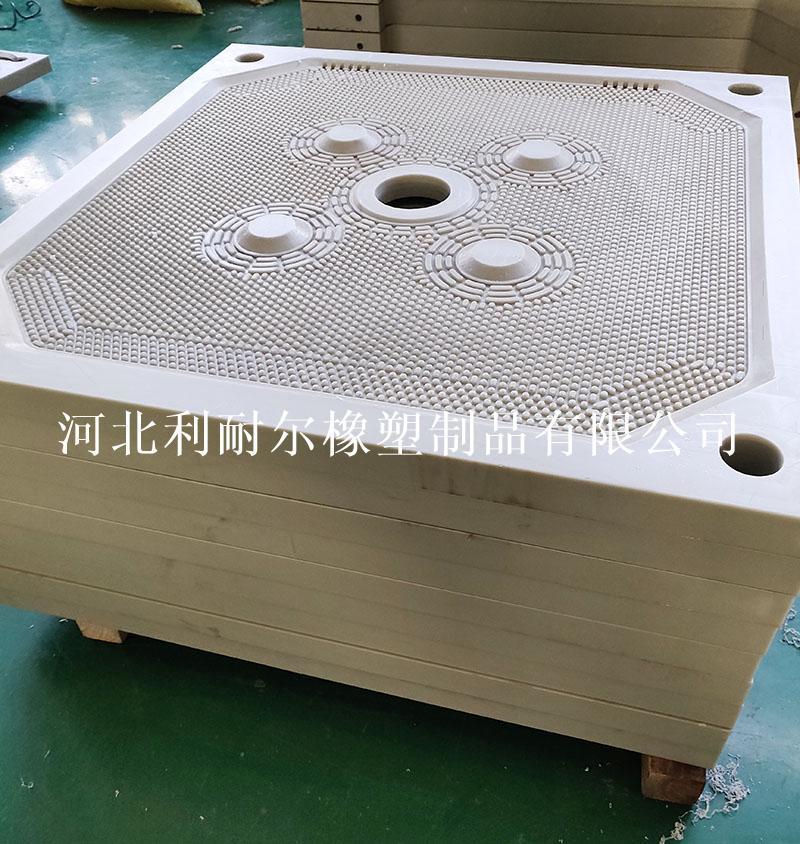
Recessed chamber filter press parts and filter press membrane plates form the core pressure-bearing structure. Polypropylene filter plates dominate U.S. installations because polypropylene resists a broad pH range (2–13) and handles operating pressures up to 225 psi. Membrane plates add a secondary squeeze cycle that can reduce cake moisture by an additional 5–12 percentage points compared with recessed-only designs. Filter press gasket and seals — typically EPDM, neoprene, or Viton® — must match the plate's corner-feed or center-feed geometry exactly; a cross-brand gasket swap is one of the most common sources of sudden bypass leaks.
Feed, filtrate, and manifold components
Filter press feed pump components, inlet nozzles, corner-feed ports, and filtrate drain cocks collectively govern slurry distribution and clean-filtrate collection. Drain cock valves and collection manifolds degrade through abrasion and chemical attack; on older Shriver-style frames, cast-iron components are frequently replaced with schedule-80 PVC or CPVC equivalents for corrosion resistance without structural penalty.

Filter cloth selection: the make-or-break decision
Choosing the wrong filter cloth for press applications is the single fastest way to degrade cake quality and inflate operating costs. The cloth functions as both a filter medium and a release surface; optimizing for one property at the expense of the other is a false economy.
Key selection parameters
Four variables drive cloth specification:
- Fiber type — Polypropylene (PP) for general acidic/alkaline slurries; polyester (PET) for abrasive mineral tailings; nylon for high-temperature or alkali-heavy applications above 180 °F.
- Weave structure — Plain weave offers tight particle retention; twill and satin weaves improve cake release and reduce blinding on sticky sludges.
- Micron rating — Must be matched to the D50 of the feed solids; going too fine causes blinding, while too coarse produces turbid filtrate that violates discharge limits.
- Surface finish — Calendered (heat-flattened) cloths release cake more cleanly; unfinished cloths provide better initial particle capture on crystalline materials.
Cloth compatibility with plate type
Recessed chamber plates require cloths with grommet-sealed center or corner feed holes and adequate drape to follow the chamber recess under pressure. Membrane plate designs add the requirement that the cloth survive repeated diaphragm inflation cycles without fatigue cracking at the flex line. Always confirm the cloth supplier's cycle-life data at your specific operating pressure — a cloth rated for 100 psi performs very differently at 150 psi when paired with a filter press diaphragm that moves 0.5 inches per cycle.
"Filter cloth selection accounts for more unplanned downtime events than any other single variable in press operation. Getting the fiber chemistry and weave right the first time is the highest-leverage purchasing decision a plant engineer can make." — Industry consensus among filtration equipment suppliers (Micronics, Met-Chem, Roxia technical documentation)
Hydraulic system and sealing components
The hydraulic filter press system parts are what apply and maintain closing force across the plate stack during filtration. Any degradation here directly affects cake dryness and cycle repeatability.
Cylinders, seals, and pressure gauges
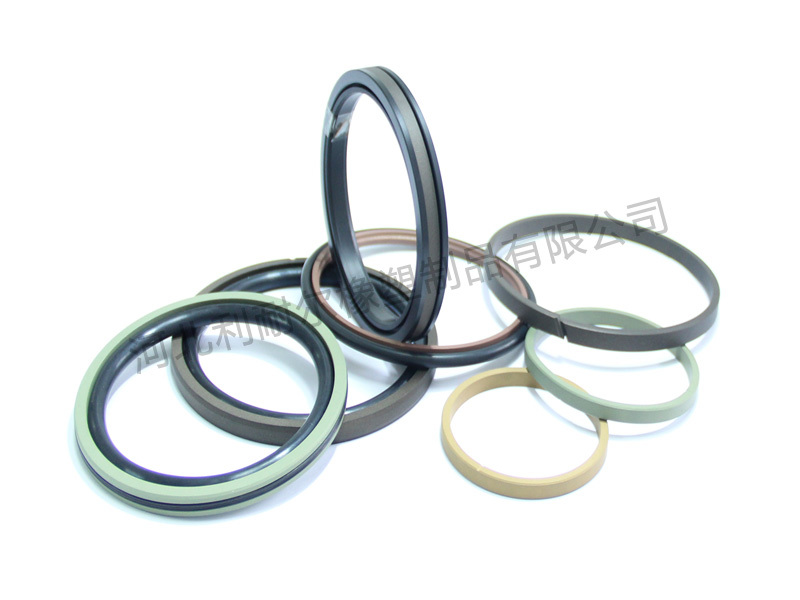
Hydraulic cylinder seal kits are the most frequently replaced hydraulic item. Seal material — typically nitrile (NBR) for standard mineral oil systems or Viton® for synthetic fluid systems — must match the hydraulic fluid specification, not just the cylinder bore diameter. A pressure gauge rated to 1.5× operating pressure is good practice; gauges with glycerin-filled bourdon tubes dampen vibration and extend service life in high-cycle applications. Real-world maintenance data from industrial press installations indicates seal kit replacement every 18–24 months under continuous operation at 150+ psi.
Filter press side bars, rails, and frame hardware
Filter press side bars and rails guide plate travel during the opening and closing sequence. Chrome-plated or stainless-steel rail surfaces reduce friction and prevent plate drag that can misalign the stack. Overhead beam filter press parts — specifically the overhead beam wear pads and suspension hangers — take the full static load of every plate in the stack; worn pads allow plate tilt that creates uneven sealing pressure and localized gasket failure.
| Component | Standard material | Chemical-resistant upgrade | Typical service life | Replacement trigger |
|---|---|---|---|---|
| Filter cloth | Polypropylene | PVDF / nylon | 6–18 months | Turbid filtrate, cake blinding |
| Recessed filter plate | Polypropylene (PP) | Cast iron / coated steel | 5–10 years | Visible cracking, warping |
| Hydraulic cylinder seal | NBR (nitrile) | Viton® | 18–24 months | Visible oil weeping, pressure drop |
| Chamber gasket / seal | EPDM | Neoprene / Viton® | 2–4 years | Bypass leakage at plate faces |
| Feed nozzle / inlet port | PP or PVC | CPVC / stainless | 3–7 years | Erosion, flow restriction |
| Side bar / rail | Carbon steel | Chrome-plated / SS | 10–15 years | Corrosion pitting, plate drag |
Automation and cake discharge accessories
Automation accessories have moved from optional upgrades to near-standard equipment in 2026 U.S. installations, driven by labor shortages in municipal water utilities and the operational requirements of continuous production in mining and chemical processing.
Cake discharge mechanism parts
Cake discharge mechanism parts include vibrating air hammers, pneumatic plate shifters, scraper blades, and the cloth-washing spray bars that follow each discharge sequence. Air hammers dislodge sticky cakes from recessed chambers; their diaphragms and poppet valves are the primary wear items, typically replaced annually in high-cycle environments. Scraper blade geometry must match the plate recess depth — a blade set 2 mm too shallow leaves a residual cake layer that compounds blinding over successive cycles. Just like a windshield wiper that's the wrong width never clears the glass cleanly, a mismatched scraper leaves a systematic blind spot in every cycle.
IoT sensors and predictive maintenance integration
The 2026 trend in dewatering equipment accessories is the integration of pressure differential sensors, cloth tension monitors, and hydraulic oil condition sensors into the press control system. These "smart" accessories feed data to SCADA or cloud-based maintenance platforms, allowing maintenance teams to shift from calendar-based replacement schedules to condition-based ones. Facilities that have piloted this approach report 20–30% reductions in cloth and seal replacement costs by avoiding both early replacements and catastrophic failures — though it is worth acknowledging that the upfront sensor integration cost can extend payback periods for smaller presses under 20 chambers.
How to match accessories to your machine model
This is where most procurement errors originate. Cross-brand substitution fails not because parts look different, but because tolerance stacks on plate thickness, lug geometry, and port diameters accumulate into functional incompatibility at operating pressure.
Step-by-step accessory specification process
- Record the machine nameplate data — manufacturer, model number, plate count, chamber volume (cu ft or liters), and design operating pressure (psi or bar).
- Measure critical plate dimensions — plate width × height, corner lug center-to-center distance, feed hole diameter, and filtrate port size. Do not rely on published specs for legacy machines; actual dimensions often vary from original drawings due to field modifications.
- Identify your process chemistry — pH range, operating temperature, and presence of solvents or oxidizers. This drives gasket, cloth, and feed nozzle material selection.
- Define the filtrate clarity requirement — turbidity target in NTU or TSS in mg/L, which sets the minimum cloth micron retention rating.
- Obtain a certified dimensional drawing from the accessory supplier before committing to a production order on custom-geometry parts such as gaskets and filter cloths.
- Request a sample set (minimum one complete plate set plus cloths) for a trial cycle run before full-volume procurement.
- Document cycle performance metrics — cycle time, cake solids %, filtrate clarity — during the trial and use them as acceptance criteria for the full order.
Handling legacy and discontinued machine models
JWI, Siemens Environmental, and Shriver units still account for a substantial portion of installed U.S. press capacity, yet many original parts are no longer in active production. For these machines, the standard industry practice is reverse-engineering from physical measurement, with suppliers producing custom filter press frame and plates or gasket profiles to match the surviving hardware. Lead times on custom-fabricated polypropylene plates typically run 8–14 weeks; planning a stocked spare set before the installed plates reach end-of-life is a standard risk mitigation strategy adopted by experienced plant engineers.
Total cost of ownership vs. unit price
Unit price comparison is the most common — and most misleading — metric used in vertical filter press accessories procurement. The real number that matters is total cost of ownership (TCO) over a defined operating period, typically 12 or 24 months.
Why downtime cost dominates the TCO calculation
Industry measurement across multiple press installations consistently places unplanned downtime costs at 2–3× the cost of the failed component itself when lost production, emergency labor, and expedited freight are included. A filter cloth that costs $400 more per set than a low-bid alternative but lasts 14 months versus 8 months does not just break even — it eliminates one full replacement event and its associated 4–8 hours of maintenance downtime per press. At a facility processing $5,000–$10,000 of throughput per operating hour, that arithmetic changes purchasing decisions immediately.
TCO framework for accessories evaluation
When evaluating competing accessory suppliers, apply a TCO framework that includes: (1) unit price × annual consumption; (2) estimated labor hours for each replacement event × fully loaded labor rate; (3) estimated production loss per replacement event; and (4) any quality-related costs such as filtrate violations or cake disposal surcharges from excess moisture. Of course, there are situations where a lower-cost part genuinely performs equivalently — the goal is not to default to the most expensive option but to make cost comparisons on the same basis. Procurement teams that adopt this approach routinely find that the apparent price premium of properly specified vertical filter press accessories is entirely offset by reduced event frequency and downtime.
Conclusion
Sourcing vertical filter press accessories is fundamentally an engineering decision dressed in purchasing clothing. The five accessory categories — filter cloths and tensioning systems, plates and membranes, hydraulic components, feed and filtrate hardware, and automation/discharge parts — each have distinct selection variables that cannot be resolved by price comparison alone. The 7-step specification process, the material-versus-operating-condition table, and the TCO framework in this guide provide a structured path from machine nameplate to qualified parts order. As 2026 U.S. discharge regulations and IoT-driven maintenance practices continue to raise the performance bar, the facilities that invest in proper accessory specification will consistently outperform those treating consumable parts as a pure cost line to minimize.
Frequently asked questions
Q: How often should filter cloths be replaced on a vertical filter press?
A: Replacement frequency depends on slurry abrasiveness, chemical environment, and operating pressure, but a typical range is every 6–18 months. The practical trigger is declining filtrate clarity (rising turbidity or TSS) or visibly increased cycle times caused by cloth blinding — not a fixed calendar interval.
Q: Can I use aftermarket polypropylene filter plates on a press made by a different manufacturer?
A: Sometimes, but only after verifying plate width, height, ear-lug center distances, feed hole diameter, and filtrate port size against your machine's actual measurements. Published dimensional tables for legacy machines are frequently inaccurate; physical measurement before ordering is non-negotiable to avoid costly mismatches.
Q: What causes hydraulic pressure loss on a vertical filter press?
A: The most common causes are worn cylinder seal kits allowing internal bypass, external seal weeping at rod or port connections, and degraded hydraulic fluid viscosity. Visible oil seepage around the cylinder rod is the earliest reliable field indicator. Seal kits should be replaced at the first sign of weeping rather than waiting for full pressure loss.
Q: What gasket material is best for acidic slurry applications?
A: EPDM handles moderate acid service well and is the most common choice for pH ranges of 3–10. For stronger acids or oxidizing environments below pH 3, Viton® (FKM) gaskets provide significantly better chemical resistance, though at higher unit cost. Always confirm the gasket's temperature rating alongside its chemical compatibility.
Q: How do membrane filter plates differ from standard recessed chamber plates?
A: Recessed chamber plates rely solely on feed pump pressure to achieve final cake dryness. Membrane plates incorporate an inflatable diaphragm that applies a secondary mechanical squeeze after the filtration phase ends, reducing residual cake moisture by 5–12 percentage points. The tradeoff is higher plate cost and the addition of a compressed air or water supply for diaphragm inflation to the system design.
Related News

Get a Quote