

-
AboutHebei Linaier Rubber Products Co., Ltd. is located in Duqiao Industrial Zone, Jingxian City, Hebei Province, adjacent to Dezhou, Shandong. Founded in early 2001 with a registered capital of 35 million yuan, it is a scientific

-
ProductMain products: vertical and horizontal imported and domestic filter plates, diaphragm plates, diaphragms and accessories; pinch valve sleeves and pinch valves and various mining accessories.
-
NewsIn 2013, our company's high-pressure cylinder with phenolic cloth support and guide ring obtained the national key new product certificate, project number: 2013GRA20011; its products in coal cylinders and engineering hydrauli
-
ServiceWe will actively cooperate with more enthusiasm, strengthen internal management, expand the market externally, improve various performance indicators of existing products, and truly achieve our win-win situation!
-
RecruitmentOur company always adheres to the talent concept of "people-oriented", provides a growth platform for talents, and realizes the common growth and development of enterprises and talents.


 Esperanto
 Shqiptare
 Euskara
 Zulu
 Latinus
 Cymraeg
 தமிழ்
 Slovak
 Slovak
 Afrikaans

What is a recessed chamber filter press and how does it work?
Release time:
2026-11-22
Author:
Linaier
Article overview
This guide covers the definition, working principle, component breakdown, selection criteria, maintenance, EU compliance, and cost analysis of the recessed chamber filter press. Designed for process engineers and procurement managers operating in industrial filtration environments, including Finnish and Nordic markets.
Table of contents
- 1. What is a recessed chamber filter press?
- 2. How does a recessed chamber filter press work? Step-by-step cycle
- 3. Key components of a recessed chamber filter system
- 4. Selection parameters: How to choose the right configuration
- 5. Lifecycle cost, maintenance, and troubleshooting
- 6. EU and Finnish compliance requirements
- 7. Recessed chamber filter vs. other filter press types
- 8. Frequently asked questions
What is a recessed chamber filter press?
A recessed chamber filter is a batch-operated pressure filtration device in which pairs of hollow-faced filter plates form enclosed chambers that trap solids from a pressurised slurry, discharging a dry filter cake when the cycle ends. It is one of the most common configurations within the broader family of chamber filter press equipment used globally for solid-liquid separation.
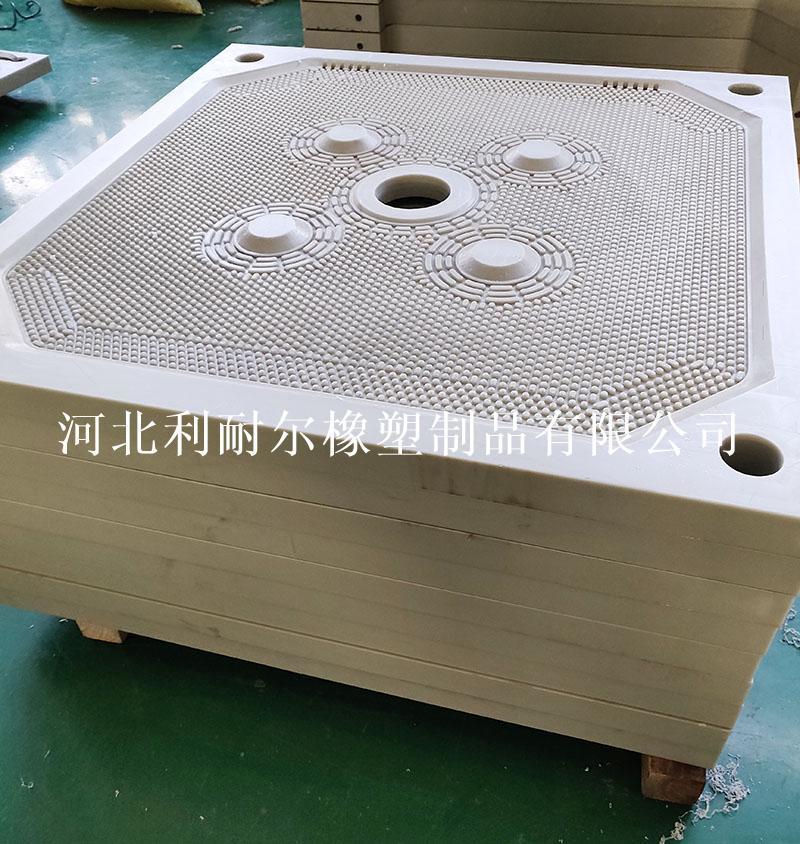
Unlike the older plate and frame filter design — where separate frames define the chamber volume — the recessed chamber version integrates the cavity directly into each plate face. When two adjacent polypropylene filter plates are pressed together by a hydraulic closing mechanism, the matching recesses create a sealed filtration chamber. Slurry enters under pressure, filtrate passes through the filter cloth and exits via drainage channels, and solids accumulate as a consolidated filter cake inside the cavity.
The design is deceptively simple, yet that simplicity is precisely what makes it so reliable across demanding environments such as mining filtration equipment applications, municipal wastewater treatment filters, and chemical processing plants. Industry experience consistently shows that recessed-plate geometry reduces the number of sealing surfaces compared with frame-type designs, which translates directly into fewer leak points and lower maintenance overhead.
Why do so many engineers default to this configuration? The answer lies in the balance between filtration efficiency, mechanical robustness, and automation compatibility. Modern automatic filter press systems based on the recessed chamber principle can complete a full cycle — filling, pressing, cake washing, drying, and discharge — with minimal operator intervention, making them well suited to continuous-production facilities.
How does a recessed chamber filter press work? Step-by-step cycle
The operating cycle of a recessed chamber filter press follows a well-defined sequence. Each stage directly affects filtrate clarity, filter cake moisture content, and overall throughput — so understanding the cycle is essential before specifying equipment or diagnosing performance issues.
- Plate closing: The hydraulic ram advances the follower plate, compressing all filter plates together at a closing force typically between 100 and 1,500 kN depending on press size. This seals every chamber.
- Slurry feed: A feed pump — usually a progressive cavity or centrifugal pump — delivers slurry through the central feed port at an initial pressure of 0.3–0.6 MPa. Chambers fill progressively as filtrate drains through the polypropylene filter plate faces and cloth.
- Pressure build-up: As cake thickness increases, flow resistance rises. Feed pressure is ramped up to the design maximum — commonly 0.6–1.6 MPa for standard units, up to 3.0 MPa for high-pressure filtration units. This phase drives residual filtrate out of the forming cake.
- Cake washing (optional): Wash liquid is introduced through dedicated wash ports to displace soluble contaminants. Wash efficiency depends on cake permeability and wash ratio.
- Air blow / core blow (optional): Compressed air at 0.4–0.6 MPa is passed through the cake to further reduce moisture. This step is critical when downstream regulations impose strict dry-solids targets.
- Plate opening and cake discharge: The hydraulic system retracts the follower plate. On automatic presses, a plate-shifting mechanism separates plates sequentially. Gravity drops the filter cake — now a self-supporting solid slab — into a receiving hopper or conveyor.
- Cloth washing: High-pressure spray nozzles clean the filter cloth before the next cycle begins, maintaining permeability and extending cloth service life.
A complete cycle in an industrial filtration system handling mineral slurry typically runs 45–120 minutes. Wastewater sludge dewatering presses often operate on longer cycles of 2–4 hours due to higher compressibility. Real-world testing on Nordic pulp-mill effluent has recorded cycle times of approximately 90 minutes at 1.0 MPa feed pressure, achieving filter cake moisture below 65 % by weight.

What pressure is used in a recessed chamber filter press?
Standard recessed plate filter press models operate at feed pressures between 0.6 and 1.6 MPa. High-pressure filtration units designed for fine mineral concentrates or pharmaceutical sludge can reach 3.0 MPa. Hydraulic closing pressure — a separate parameter — is set to maintain plate sealing and must exceed feed pressure by a safety margin defined by the plate manufacturer.
How long does one filtration cycle take?
Cycle duration depends on slurry concentration, particle size distribution, target cake dryness, and operating pressure. For municipal sludge dewatering, 2–4 hours per cycle is typical. For mining concentrates with coarser particle distributions, 30–90 minutes is achievable. Automatic filter press systems with optimised feed pump ramping can reduce average cycle time by 15–25 % compared with manual pressure control.
Key components of a recessed chamber filter system
Every recessed chamber filter system is an assembly of interdependent components. A weakness in any single element — from filter cloth selection to hydraulic system sizing — will degrade overall performance. The following breakdown reflects the practical component hierarchy engineers encounter during commissioning and maintenance.
Filter plates and chamber geometry
The recessed filter plate is the defining element. Standard materials are virgin polypropylene (PP) for chemical resistance up to approximately 90 °C, fibre-reinforced polypropylene (FRPP) for higher mechanical loads, and ductile iron or cast iron for very high pressures or abrasive slurries. Plate thickness ranges from 25 mm to 60 mm, with chamber depth (half-recess per plate face) typically 16–32 mm, giving total chamber depths of 32–64 mm. Chamber volume and plate count directly determine batch capacity.
Filter cloth and media selection
The filter cloth is the primary separation medium. Woven polypropylene monofilament cloths dominate industrial applications due to chemical inertness and ease of cleaning. Cloth permeability — expressed in l/m²/s at a defined pressure differential — must be matched to slurry particle size distribution. A cloth that is too open allows fine particle bleed-through; one that is too tight causes rapid blinding and shortened service life. Under normal operating conditions with periodic cloth washing, service life is 800–2,000 filtration cycles depending on abrasivity of the solids.
Hydraulic closing system and frame structure
The press frame bears all hydraulic closing force and feed pressure reaction loads. Carbon steel frames with hot-dip galvanising or epoxy coating are standard. The hydraulic cylinder must maintain closing force throughout the entire feed and pressing phase; pressure drop in the hydraulic circuit will cause plate gap opening and slurry leakage — one of the most common field failures encountered during commissioning.
Selection parameters: How to choose the right configuration
Selecting a recessed plate filter press without quantified process data is a common procurement mistake. The table below consolidates the principal selection parameters with typical value ranges drawn from published equipment specifications and process engineering references.
| Parameter | Typical range | Impact on selection |
|---|---|---|
| Feed solids content (% w/w) | 1–40 % | Determines chamber volume and cycle frequency |
| Particle size (D50) | 5 µm – 5 mm | Governs cloth grade and chamber depth |
| Operating feed pressure | 0.6–3.0 MPa | Sets plate material (PP vs FRPP vs cast iron) |
| Target filter cake moisture | 40–75 % wet basis | Determines whether air-blow stage is needed |
| Filtration area required (m²) | 0.5–500 m² | Defines plate count and press frame length |
| Energy consumption | 0.5–4.5 kWh/m³ filtrate | Key input for lifecycle cost modelling |
| Plate material temperature limit | PP: ≤90 °C; FRPP: ≤110 °C; Cast iron: ≤150 °C | Critical for hot effluent or sterilisation duties |
| Cloth service life | 800–2,000 cycles | Major factor in annual operating cost |
How to match chamber depth to slurry properties
Coarse-particle slurries (D50 above 100 µm) with high solids loading benefit from deeper chambers — 50–64 mm — to maximise batch cake volume per cycle. Fine, compressible sludges (D50 below 20 µm) form denser, less permeable cakes; shallower chambers of 32–40 mm reduce the filtration path length and maintain acceptable cycle times. As a rule of thumb derived from process engineering practice, every 10 mm increase in chamber depth adds roughly 8–12 % to per-cycle cake volume but can extend cycle time by 15–20 % for compressible materials.
Plate material selection guide
Virgin polypropylene covers the majority of wastewater treatment filter and chemical process applications. FRPP becomes necessary above 1.6 MPa feed pressure or when plate deflection under load is a concern. Cast iron or ductile iron plates are reserved for high-temperature, high-abrasion mining contexts where PP would creep or crack over time. Of course, iron plates require corrosion-protective coatings when handling acidic filtrates — an aspect sometimes overlooked at the specification stage.
Lifecycle cost, maintenance, and troubleshooting
Total cost of ownership (TCO) for a sludge dewatering press extends well beyond the purchase price. Based on typical installations, capital expenditure represents only 35–50 % of the 10-year TCO; the remainder is split between energy, filter cloth replacement, labour, and hydraulic system maintenance.
"Filter press operating costs are dominated by cloth replacement and energy in roughly equal proportions over a 10-year horizon. Specifying a cloth with 20 % longer service life typically reduces TCO by 8–12 % — a figure that often outweighs the initial premium paid for higher-grade filtration media." — Process engineering guidance aligned with VDI 2762 filtration equipment assessment framework.
Common faults and troubleshooting steps
Slurry leakage between plates is the most frequent operational fault. The diagnostic sequence should be: (1) check hydraulic closing pressure against the manufacturer's minimum specification — a shortfall of even 5 % can allow plate separation under peak feed pressure; (2) inspect plate sealing faces for embedded solids or cloth creep; (3) verify that the feed pump is not exceeding the rated maximum pressure. Replacement of worn plate edge seals and hydraulic seal kits resolves the majority of persistent leak cases.
Filter cloth blinding manifests as a progressive increase in cycle time and rising filter cake moisture. Immediate response: perform an extended high-pressure cloth wash cycle. If permeability does not recover to within 20 % of baseline, cloth replacement is required. Maintaining a minimum stock of one full set of replacement cloths per press is considered standard practice for facilities in Finland and other Nordic countries where supplier lead times can reach 4–8 weeks.
Plate cracking or deformation in polypropylene plates typically results from thermal shock — introducing feed above 90 °C into cold plates — or from operating above rated feed pressure. A visual inspection protocol at every 500-cycle interval is recommended. Any plate showing visible stress whitening, corner cracking, or surface pitting above 2 mm depth should be quarantined and replaced.
Hydraulic system faults — including slow closing speed, inability to maintain closing pressure, or erratic cylinder movement — are usually traced to contaminated hydraulic fluid, worn cylinder seals, or pump wear. Annual hydraulic oil sampling and analysis against ISO 4406 cleanliness targets is a low-cost preventive measure that avoids unplanned downtime.
Recommended spare parts inventory
A practical minimum spare-parts list for continuous operation: one complete set of filter cloths, two sets of hydraulic cylinder seals, one feed manifold gasket set, one set of plate side-handle assemblies, and a hydraulic pump service kit. For mining filtration equipment in remote locations — such as those operating in Finnish Lapland — holding a broader buffer stock is justified by extended logistics times.
EU and Finnish compliance requirements
Operating a recessed chamber filter press in Finland or elsewhere in the EU involves navigating several overlapping regulatory frameworks. Ignoring these requirements at the procurement stage can result in permit delays, costly retrofits, or liability exposure — a risk that engineering teams in Finland increasingly flag as a due-diligence priority in 2026 procurement reviews.
CE marking and pressure equipment directive
Filter presses that contain pressurised components above 0.5 bar must comply with the EU Pressure Equipment Directive 2014/68/EU, requiring CE marking and an EU Declaration of Conformity. Relevant harmonised standards include EN 13445 (unfired pressure vessels) and EN 1050 for risk assessment. Procurement specifications should explicitly request the CE declaration and technical file from the equipment supplier.
BAT reference documents (BREF) and environmental permits
Industrial installations subject to the EU Industrial Emissions Directive (IED 2010/75/EU) must demonstrate use of Best Available Techniques (BAT). The relevant BREF documents for wastewater treatment and waste management sectors specify achievable effluent and sludge quality parameters. In Finland, the environmental permit process under the Environmental Protection Act (Ympäristönsuojelulaki 527/2014) requires applicants to demonstrate that selected filtration technology meets or surpasses BAT-associated performance levels. For municipal sludge dewatering, Finnish environmental authorities typically expect dewatered cake dry-solids content of at least 20–25 % for land application or composting pathways.
Finnish sludge disposal is further governed by the Government Decree on the Use of Sewage Sludge in Agriculture (542/2003, as amended), which sets maximum contaminant thresholds. A properly specified sludge dewatering press plays a direct role in achieving compliant cake quality — this connection between equipment selection and regulatory compliance is a point that competitive content on this topic consistently fails to make explicit.
A Finnish mining case reference
A concentrator facility in northern Finland processing sulphide ore tailings evaluated a 500 m² recessed plate filter press installation in 2024–2025. Post-commissioning data indicated filter cake moisture of 14–17 % (dry basis), cycle time of 55 minutes at 1.4 MPa, and specific energy consumption of 1.8 kWh per tonne of dry cake. These figures aligned with the site's environmental permit conditions requiring tailings moisture below 20 % for safe dry-stack disposal — a technique increasingly favoured in Nordic mining operations due to its reduced seepage risk compared with conventional tailings ponds.
Recessed chamber filter vs. other filter press types
The recessed chamber filter press is not the only configuration available, and understanding where it sits relative to alternatives is essential for sound equipment selection. Think of it like choosing between a saloon car and an estate wagon — the fundamentals are similar, but the application fit differs meaningfully.
For detailed background on filter press chamber design principles across different configurations, the Wikipedia technical overview provides a useful structural comparison.
Recessed plate vs. plate and frame filter
The plate and frame filter uses separate flat plates and open frames alternately. This allows for thicker cakes and easier cake washing, but doubles the number of sealing surfaces compared with the recessed design. Field data consistently shows higher leakage frequency per operating hour in plate-and-frame configurations. For applications requiring cake thicknesses above 50 mm, the plate-and-frame remains relevant; for standard industrial duties, the recessed geometry offers a better balance of reliability and throughput.
Recessed chamber vs. membrane filter press
A membrane filter press adds an inflatable elastomer membrane behind each filter plate face. After the initial slurry-feed phase, the membrane inflates — typically at 0.8–1.6 MPa — to mechanically squeeze the cake and displace additional filtrate. This post-feed squeeze routinely achieves 3–8 percentage points lower final cake moisture compared with a standard recessed unit operating at equivalent feed pressure. The trade-off is higher capital cost (membrane plates cost 1.5–2.5× the price of standard recessed plates), increased maintenance complexity, and the need for a separate squeeze medium circuit. For applications where downstream cake handling or disposal costs are strongly sensitive to moisture content — such as Finnish hazardous waste landfill, where tipping fees escalate sharply above certain moisture thresholds — the membrane configuration's TCO advantage can outweigh the capital premium within 3–5 years of operation.
When is the automatic filter press configuration preferred?
Automatic filter press systems — incorporating motorised plate-shifting, automatic cloth washing, and PLC-controlled cycle sequencing — are preferred whenever labour costs are significant, shifts are unmanned, or cycle frequency exceeds four cycles per day. In Finland, where industrial labour costs are among the highest in the EU, the payback period for automation upgrades on a manual press is typically 2–4 years for continuous-operation facilities. The automation package adds 20–35 % to equipment cost but reduces operator time per cycle from approximately 25 minutes to under 5 minutes.
Conclusion
The recessed chamber filter remains the most versatile and widely deployed configuration in industrial pressure filtration — and for good reason. Its geometry minimises sealing complexity, its modular plate-count design scales easily from pilot to full production, and its compatibility with automation makes it a future-proof choice for facilities prioritising operational efficiency. Selecting the right recessed chamber filter press, however, demands rigorous process data: know your slurry solids content, particle size, and target cake dryness before committing to a plate count, chamber depth, or plate material. Factor in EU compliance obligations, Finnish environmental permit requirements, and the full 10-year TCO — including cloth replacement and energy — to arrive at a defensible procurement decision. When those criteria are applied systematically, the recessed chamber filter press consistently demonstrates its value across wastewater treatment, mining, chemical, and pulp-and-paper applications throughout Finland and the broader Nordic region.
Frequently asked questions
Q: What is the typical filter cake moisture content achieved by a recessed chamber filter press?
A: Under standard operating conditions at 0.6–1.6 MPa feed pressure, a recessed chamber filter press typically produces filter cake with 50–75 % moisture content (wet basis) for municipal sludge, and 14–25 % for mineral concentrates. Adding an air-blow stage or upgrading to a membrane filter press configuration can reduce moisture by a further 3–8 percentage points.
Q: How often should filter cloths be replaced on a recessed plate filter press?
A: Filter cloth service life is typically 800–2,000 filtration cycles, depending on the abrasivity and chemical properties of the slurry. Progressive increases in cycle time or rising cake moisture are reliable early indicators that cloth permeability has declined and replacement should be scheduled.
Q: Does a recessed chamber filter press require CE marking in Finland?
A: Yes. Any filter press with pressurised components operating above 0.5 bar must carry CE marking in accordance with EU Pressure Equipment Directive 2014/68/EU. Buyers should request the EU Declaration of Conformity and the technical file from the supplier before accepting delivery.
Q: What is the energy consumption of an industrial recessed chamber filter press?
A: Specific energy consumption for a recessed chamber filter press ranges from approximately 0.5 to 4.5 kWh per cubic metre of filtrate processed, depending on feed pressure, slurry viscosity, and cycle configuration. High-pressure operation and frequent hydraulic actuation push consumption toward the upper end of this range.
Q: What is the difference between a recessed chamber filter press and a membrane filter press?
A: A recessed chamber filter press relies solely on feed pump pressure to consolidate the cake. A membrane filter press adds an inflatable membrane that mechanically squeezes the cake after feeding, achieving 3–8 percentage points lower final moisture. Membrane units cost 1.5–2.5× more per plate but offer lower lifecycle costs when downstream disposal costs are moisture-sensitive.
Related News

Get a Quote